
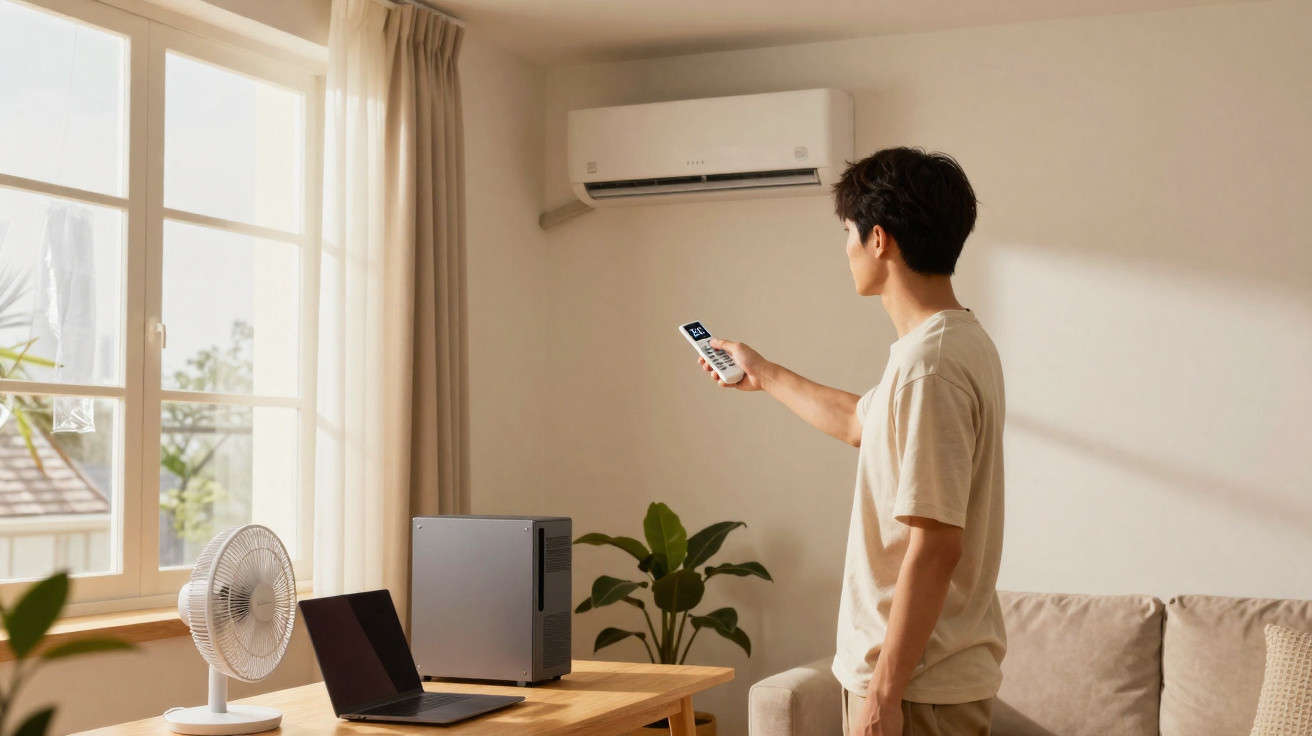
Regulating how you use air conditioning matters, both for your household budget and for limiting its contribution to global warming.
Setting the right air conditioning temperature
There isn’t a single perfect temperature for everyone, as the “ideal” setting depends on several factors. However, if it is 25°C or hotter outdoors, it is generally advised to set your unit to 24°C. If it is cooler than that outside, you can usually do without air conditioning.
There are a few reasons for this. First, once temperatures reach 25°C, heat can significantly undermine productivity: concentrating becomes harder, and computers are more prone to overheating. Peer-reviewed scientific research has shown this. Second, the lower you push the indoor temperature, the more electricity you will pay for.
As a result, a difference of three degrees could cost up to 15% more. Of course, these figures should be treated cautiously, because they vary depending on your equipment, your settings and your energy supplier. Even so, the overall pattern is straightforward: the less you cool, the more you save. With inflation driving up costs during the current crisis, it is worth knowing the right habits to adopt.
Cooling your home: tips
Before switching on the air conditioning, ask yourself: is it really worth the expense? In some situations-and provided you are not overlooked-it may be more sensible to remove clothing and open the windows to create a draught.
Night-time ventilation and managing light
In the evening, fitting insect screens can be enough. At the same time, remember to draw the curtains across other windows so you do not disrupt insects’ night-time navigation, especially as their populations are under threat.
Alongside this, try to keep outside air moving through the home throughout the night (when the temperature allows). Conversely, close shutters as soon as you can during the day.
Smart controls: smart thermostat and smart blinds (Ikea and others)
A smart thermostat can adjust indoor temperature in real time to keep energy use under control, including pre-conditioning the home before you arrive. The same approach applies to smart blinds, such as those from Ikea or competing brands.
What about the computer?
For electronic devices, the priority is not to leave them in direct sunlight-even through a window-because heat can be harmful to components.
For computers specifically, there are laptop stands with built-in fans, and some smartphones even use heat pipes. Also note that using an external monitor can significantly increase your PC’s energy consumption, so take care.



Comments
No comments yet. Be the first to comment!
Leave a Comment