
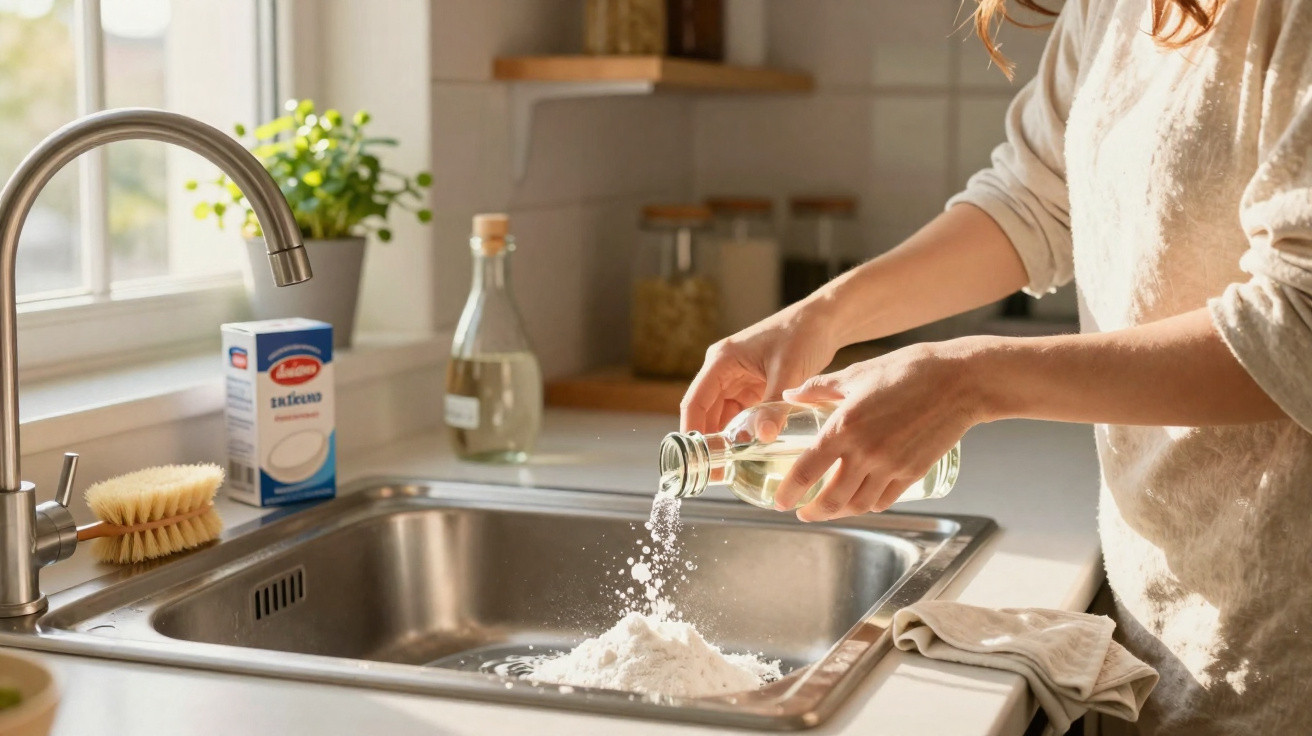
Mixing baking powder and vinegar is a familiar habit in many households and often sparks curiosity. Because both are simple ingredients found in most kitchens, the pairing is frequently linked to cleaning tasks and general home care. The fizzing reaction is eye-catching and can also have practical, everyday uses.
Why does mixing baking powder and vinegar help with household cleaning?
This combination of baking powder and vinegar is mainly suggested because of the effervescent reaction that happens when they meet. Baking powder contains compounds that react with the acid in vinegar, releasing gas and creating bubbles that can help lift residue from awkward, hard-to-reach areas.
In day-to-day use, people commonly apply it to drains, grout lines, and surfaces with a light build-up of grease or soap scum. As an acidic liquid, vinegar helps break down surface grease and lessen odours, while the baking powder boosts the physical “lifting” action of the bubbles, acting as a helpful extra alongside scrubbing with a sponge or brush.
How to prepare and apply the baking powder and vinegar mixture correctly
For a practical approach, the usual guidance is to put the baking powder on first, directly onto the area, and then pour in the vinegar gradually. For drains, for instance, it is common to use 1 to 3 tablespoons of baking powder, followed by around half a cup of vinegar, leaving it to work for a few minutes before rinsing.
On flat surfaces such as a hob or sink, many people make a paste using baking powder and a small amount of water, spread it over the dirt, then spray vinegar over the top. For grout, the mixture is applied only along the line between tiles and left for 5 to 15 minutes before scrubbing, while avoiding use on very delicate or porous materials without testing first.
When is the baking powder and vinegar mixture most effective?
This pairing is best suited to light-to-moderate cleaning: it can help loosen stuck-on grime, reduce smells, and deal with surface residues. It does not replace strong drain unblockers or specialist disinfectants, but it can be a useful option for regular household maintenance-especially in spots where dirt tends to build up.
Everyday uses are often highlighted in home-cleaning tips, particularly in damp areas or where grease is present. The most common applications include:
- Drains and shallow pipework: helps shift light grease deposits, soap residue, and reduce odours.
- Tile grout: supports the removal of stuck dust and mild staining from everyday dirt.
- Hobs and ovens: helps loosen food splashes and grease that is not too old.
- Sinks and worktops: can help reduce odours after food preparation, as long as it is rinsed away thoroughly.
What precautions should you take when using baking powder with vinegar for cleaning?
When using baking powder and vinegar, remember the reaction creates gas and foam, so containers should not be sealed tightly to prevent pressure building up. In drains, the usual recommendation is to rest the plug or cover on top without closing it fully until the fizzing calms down and the water can be used normally.
It is also important to avoid using vinegar on surfaces that may stain or react to acids, such as certain natural stones and sensitive metals. Always test a small area first, rinse well after use, and use products within their best-before date-so this kitchen curiosity can become a genuinely useful helper in your regular cleaning routine.






Comments
No comments yet. Be the first to comment!
Leave a Comment