
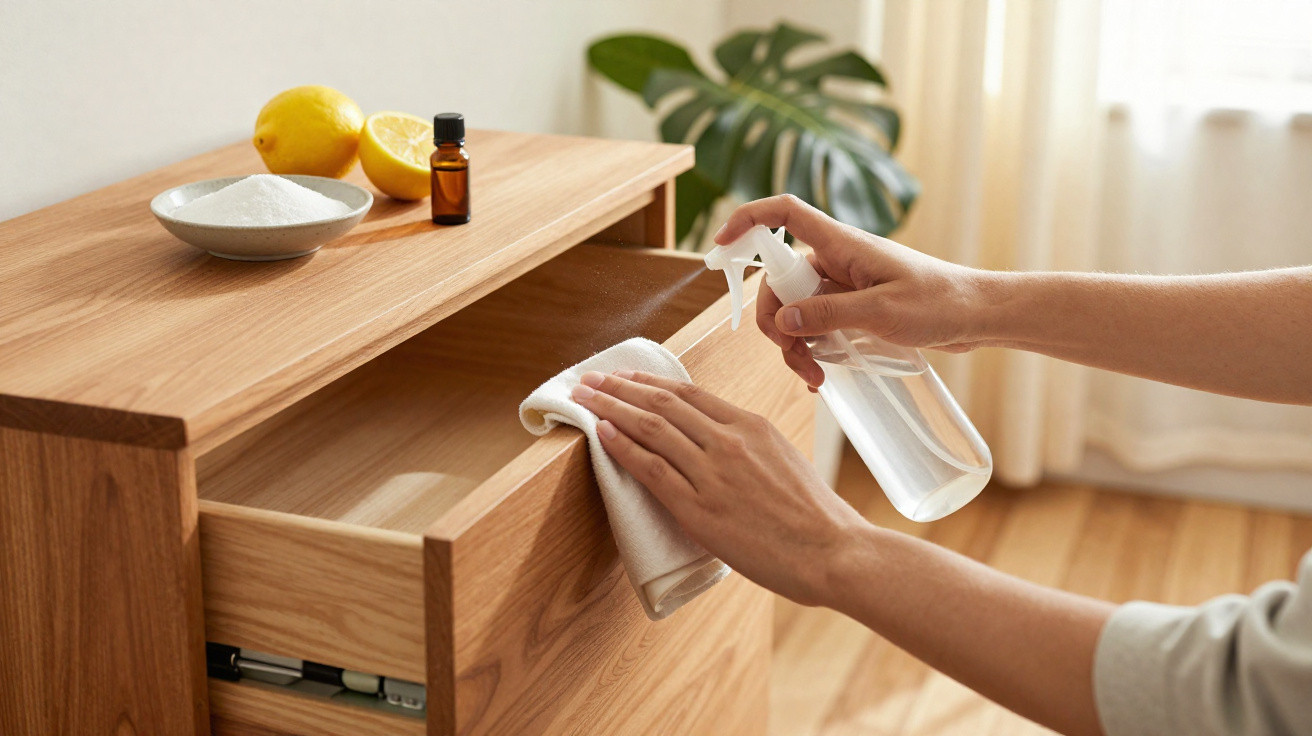
Removing a musty smell from wooden furniture means tackling two things at once: the damp that feeds the issue and the odour that gets trapped in the wood’s pores, drawers, joints, gaps and back panels. Washing with mild washing-up liquid, well-diluted white vinegar, bicarbonate of soda and thorough drying can solve mild cases, but the smell often returns if the timber stays damp or the unit is pushed up against a cold wall.
Why does wood absorb a musty smell so easily?
Wood is porous. Even when it has been varnished, waxed or painted, untreated backs, internal drawer surfaces and poorly ventilated corners can still hold on to moisture, dust and mould spores. That is why wardrobes and cupboards left shut for long periods can smell unpleasant before any visible spotting appears.
Health and environmental bodies repeatedly stress that mould control starts with moisture: cleaning helps, but leaks, condensation and poor ventilation must be fixed to prevent regrowth. With porous materials, mould can work its way into cracks and crevices, which makes complete removal harder.
Which home solution neutralises the odour without harming the finish?
For wooden furniture, the safest approach is to avoid soaking it. Mix a solution of 500 ml warm water, 1 teaspoon of mild washing-up liquid and 2 tablespoons of white vinegar. This lifts surface grime and reduces odours without being as harsh as strong chemical products.
- Use a cloth that is only lightly damp - never dripping wet.
- Test first on a hidden patch to check the finish.
- Do not use neat vinegar on waxed, lacquered or very old wood.
- Dry straight away with a clean cloth, then leave the furniture open in a well-ventilated spot.
How do you apply it inside drawers, doors and shelves?
Remove clothing, papers and any stored items before you start. Vacuum, or wipe with a dry cloth to lift dust, then clean the interior surfaces with the diluted mixture, working with the grain and making sure no liquid sits in corners or along edges.
Once everything is dry, place an open container of bicarbonate of soda or activated charcoal inside the piece for 24 to 72 hours. These absorbents do not “kill” mould, but they can help draw out lingering smells after the surface has been cleaned and the wood is properly dry.
How many times should you repeat the process?
For a light smell, one careful clean plus 48 hours of airing is usually enough. For furniture that has been shut for months, repeat the clean-and-absorb cycle up to three times, always waiting for complete drying between rounds.
- Day 1: clean with washing-up liquid and diluted vinegar, then dry.
- Days 2 and 3: leave bicarbonate of soda or activated charcoal inside drawers, with doors closed.
- Day 4: air it out with doors open and indirect sunlight.
- If the odour remains: repeat the cycle once or twice more.
- If there are deep stains or the wood feels soft: consider restoration or disposing of the item.
How to seal the wood so the smell does not come back
After the furniture is dry and no longer smells strongly, you can strengthen protection with wax, a suitable wood oil, varnish or a sealer that matches the original finish. This helps close some of the pores, reduces moisture uptake and makes future cleaning easier.
Results last longer when the piece is kept a few centimetres away from the wall, aired weekly and not used to store damp clothes. If the smell returns quickly, the cause is usually the room rather than the furniture: a damp wall, high humidity, limited air movement, or the back of the unit constantly exposed to condensation.



Comments
No comments yet. Be the first to comment!
Leave a Comment