
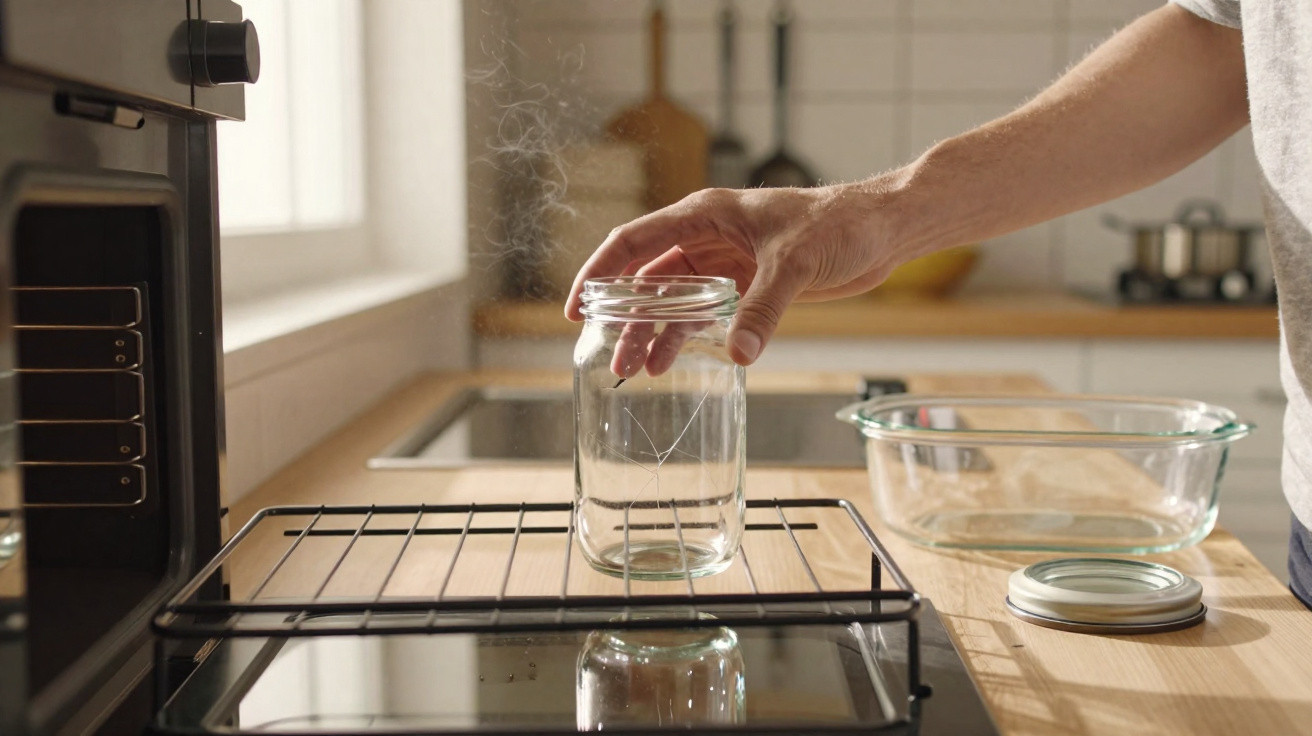
Preserve jars may look sturdy, but they were never designed to be used as oven dishes. Baking in a jar that once held hearts of palm, olives or jam can lead to cracking, sudden breakage and a serious risk of accident.
Why shouldn’t a preserve jar go in the oven?
The glass used in many preserve jars is standard glass-typically soda-lime-made for bottling and storage, not for coping with sharp temperature swings. In an oven, uneven heating can trigger thermal shock and cause the glass to rupture.
Borosilicate glass, by contrast, is known for its resistance to heat and chemicals, which is why it’s used in cookware intended for oven use. That difference is exactly why a proper oven-safe dish is not the same thing as a reused preserve or jam jar.
The danger comes from the following:
- Ordinary glass: preserve jars are not ovenproof dishes.
- Thermal shock: a rapid temperature change can crack the glass.
- Oven heat: the jar does not warm evenly all the way round.
- Ovenproof cookware: it must be clearly labelled as suitable for oven use.
- Safe reuse: jars are best reserved for storing cold or dry foods.
What’s the difference between ordinary glass and borosilicate?
The ordinary glass in preserve jars is engineered to cope with normal packaging demands-transport, sealing and storing food. It does not have the same thermal tolerance as cookware designed for baking, gratinating or heating.
Borosilicate glass expands less when heated, which helps reduce the chance of breakage during temperature changes. Even so, oven-rated glassware still needs care: no glass should go straight from the fridge into a hot oven, or be hit with cold water immediately after being overheated.
How can you identify a true ovenproof dish?
A safe ovenproof dish should carry clear manufacturer information, such as “oven safe”, a stated heat rating, “borosilicate”, “tempered glass for oven use”, or “ovenproof”. If a jar does not explicitly say it can go in the oven, the safest rule is not to use it for baking or gratinating.
A preserve jar is not a baking dish
No oven marking, don’t risk it.
Glass items that look similar can have very different compositions and heat resistance. Use proper roasting dishes and baking tins for the oven, and keep jars for cold storage.
It’s also wise to be cautious with reused jars that have a metal lid, thin glass, a narrow neck, or any signs of impact. Tiny cracks you can’t see can spread with heat and turn a small saving into a kitchen accident.
Before putting any glass in the oven, check:
- Whether there’s a symbol or wording confirming use in a conventional oven.
- Whether the manufacturer states a temperature limit.
- Whether the glass is free from cracks, chips or deep scratches.
- Whether the item has not come straight from the fridge into a hot oven.
- Whether plastic lids, metal lids or rubber seals have been removed.
What safe uses are left for preserve jars?
Even if they’re not suitable as oven cookware, preserve jars are still very handy at home. They work well for storing grains, spices, nuts, sugar, coffee, biscuits and other dry items-provided they are thoroughly washed, fully dried and free from odour from the previous food.
They can also hold cold leftovers in the fridge, sauces that have already been cooled, prepared salads, chopped fruit and packed lunches that will not be reheated in the jar itself. The key is to avoid sudden temperature changes, rusty lids and containers with damaged glass.
Use reused jars for:
- Storing dry foods in cupboards and the pantry.
- Organising spices, seeds, teas and grains.
- Keeping cold foods in the fridge.
- Separating small household items away from the kitchen.
- Serving chilled desserts such as mousses, creams and individual trifle portions.
What’s the safest rule for glass in the kitchen?
As with the wider discussion about glass versus plastic in food safety, the material is only beneficial when it’s used correctly. Ordinary glass is excellent for storage, but it should not be mistaken for ovenproof glass cookware.
The rule is straightforward: for baking, use only dishes and tins that are explicitly rated for oven use. When reusing preserve jars, stick to cold or dry storage. That way, you cut waste without putting the kitchen at risk because of unsuitable glass.





Comments
No comments yet. Be the first to comment!
Leave a Comment