
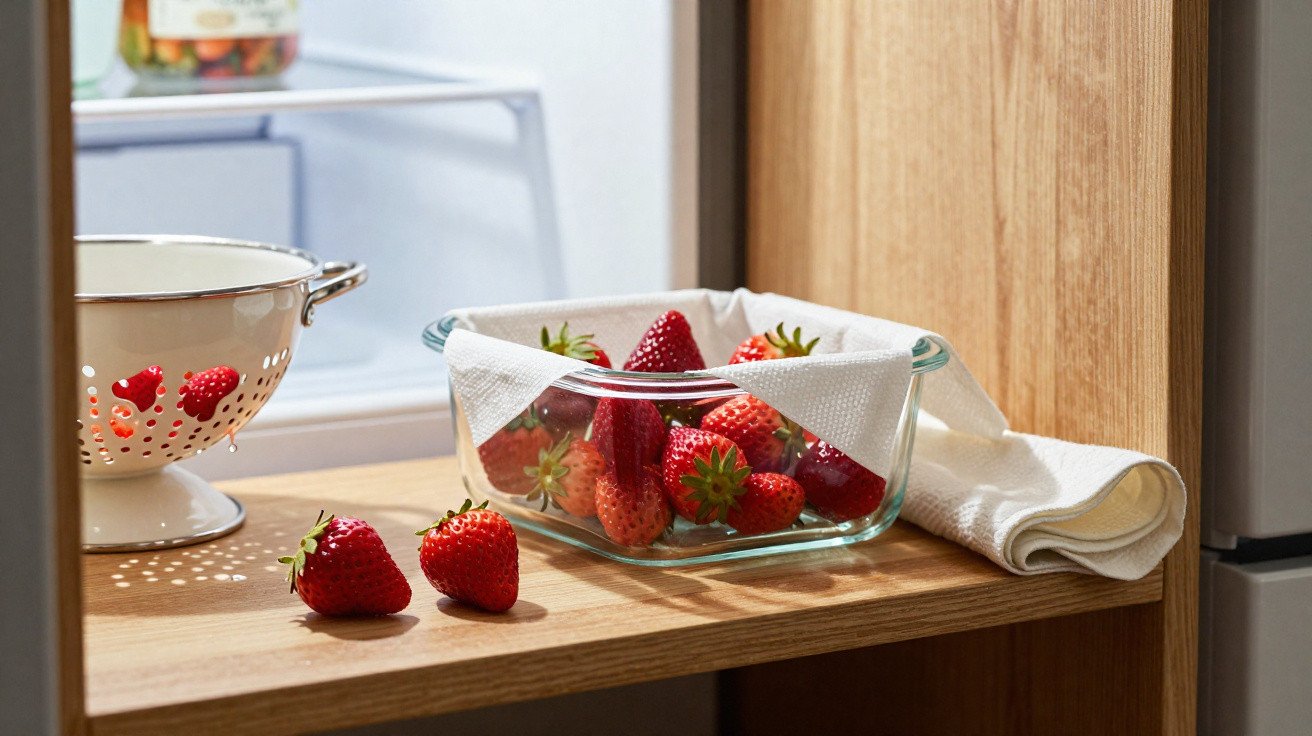
Another spot keeps them noticeably fresher for longer.
Anyone who has ever pulled a punnet of strawberries out of the fridge with high hopes, only to find fruit that’s soft, dull or already mouldy, knows exactly how frustrating they can be. It’s the familiar pattern: they either go off in the salad drawer or turn far too quickly on the worktop. Yet there’s a simple trick that keeps strawberries firm and full of flavour for several days - nowhere near the fridge or the fruit bowl.
Why the fridge ruins strawberries
In many homes, strawberries get treated like salad leaves or vegetables: straight into the fridge and they’ll keep. With strawberries, that approach backfires. Once temperatures drop below about 4 °C, their structure starts to suffer.
"In the fridge, a strawberry loses its texture first, then its aroma - and in the end you often lose the whole punnet."
Strawberries are made up largely of water. When they get too cold, their delicate cell structure breaks down. The result is flesh that turns soft and sponge-like, while the skin can look wrinkled. At the same time, the flavour becomes flatter because the natural ripening process slows.
Another issue is the high humidity inside a fridge. If strawberries sit in a closed plastic punnet, condensation forms quickly. That moisture is ideal for mould. Often one slightly affected patch is enough for grey fuzz to spread across several berries within a day.
On top of that, strawberries absorb surrounding smells. If they’re left unprotected next to onions, cheese or uncovered ready meals, their fine scent and taste can be tainted. If there’s genuinely no alternative, you can use the fridge - but only briefly, ideally for no more than 24 hours.
Why the worktop isn’t a great idea either
The obvious alternative is simply leaving them out: in the fruit bowl, on the table, in an open basket. That only works reasonably well if you’re planning to eat them very quickly.
In a heated kitchen or in direct sunlight, strawberries age at speed. The skin softens, the fruit starts to ferment, and the sugar breaks down. Then there are big swings in temperature and humidity - for instance when steam builds up during cooking or a window is opened.
"On the worktop, strawberries are a luxury on a timer: after a day, the freshness is usually gone."
If you’re snacking on them the same day, leaving them out is fine. If you want them to stay enjoyable for another two or three days, you’ll need a better spot.
The best place: cool, dry, dark
The ideal environment for strawberries is closer to a wine cellar than a salad drawer: cool but not icy, dry, and away from direct light.
Temperatures of roughly 10–14 °C are best. You can often find conditions like that in:
- a larder or storage cupboard on an internal wall
- a well-ventilated cellar
- a clean, temperate garage with no exhaust fumes
Stored there, strawberries usually last three to five days without losing much flavour or bite. The gentle cool slows spoilage without damaging the fruit’s tissue. Darkness reduces oxidation, meaning the berries discolour more slowly and stay visually appealing.
"A cool larder cupboard or cellar creates the climate strawberries are used to in the field - and that’s exactly what they like."
Airflow matters too. Still, damp air quickly leads to mould. A slightly open cupboard door or a shelf in the cellar is therefore better than a sealed plastic box sitting in the warmest corner of the kitchen.
How to prepare strawberries properly for storage
The location is only half the story. Just as important is how the berries get there. A few simple steps can significantly extend their shelf life.
Steps you should follow
- Don’t wash straight away: moisture on the surface encourages mould. Rinse strawberries only shortly before eating.
- Keep the green tops on: remove the stalk and little leaves only just before serving, so they stay juicier for longer.
- Store in a single layer: place them in one layer in a shallow dish so they don’t crush each other.
- Use a liner: put kitchen paper on the bottom of the container to absorb moisture.
- Let the fruit breathe: choose baskets or ventilated boxes, not airtight plastic tubs.
If you buy strawberries fresh from a pick-your-own field or the market, it’s best to take them out of the tight plastic punnet as soon as you can. A wooden punnet or wire basket works better because air can circulate.
A daily check can save a whole punnet
Strawberries are sensitive: one damaged berry can spoil the lot. That’s why a quick daily glance is worth it.
"As soon as a strawberry looks soft, dark or mouldy, remove it immediately - otherwise it will contaminate all the others."
Those few seconds often prevent an entire punnet being wasted - and save money. If you like buying larger quantities, for example during seasonal deals, it’s worth building this routine in.
If you have too many: it’s better to process them
Sometimes you simply buy more than you can eat. Or your own garden suddenly produces more strawberries than you can get through in a few days. In that case, the only answer is to turn fresh fruit into something that keeps.
Popular options include:
- Jam or preserve: a classic, keeps for a long time, and perfect for using very ripe fruit.
- Purée or fruit sauce: ideal with yoghurt, pancakes or desserts; it will keep for a few days in the fridge.
- Strawberry compote: quick to cook and good hot or cold.
If you have space in the freezer, you can freeze strawberries too. Wash the fruit, dry it gently, remove the green tops and place the berries spaced apart on a baking tray. Once frozen solid, transfer them into freezer bags or containers. This way they don’t clump together and you can use portions later for smoothies, cakes or sorbets.
How to recognise good strawberries - and what they really don’t like
You can influence how long strawberries last from the moment you buy them. Ripe but firm berries with a bright red colour and fresh green tops generally keep better than overripe, very dark fruit.
| Criterion | Better choice | Worse choice |
|---|---|---|
| Colour | Evenly red, slightly glossy | Dull, with brown or very dark patches |
| Texture | Firm, gives slightly to pressure | Soft, easily bruised, damp spots |
| Leaves | Green, fresh, not dried out | Yellowish, limp or brown |
Strawberries dislike both heat and moisture. Leaving them in a closed car in summer, or putting them back into the punnet with wet hands, will noticeably shorten their life. Stacking heavy groceries on top of a punnet in your shopping basket also quickly causes bruising.
Practical combination tips for everyday strawberries
If you buy strawberries regularly in spring and summer, a simple routine helps: as soon as you get home, quickly check the fruit, discard any poor berries, then lay the rest out on a tray lined with kitchen paper and move it to a cool larder cupboard or cellar.
For the next day, set aside one portion and leave it in an open dish in the kitchen - for snacking, dessert or muesli. That keeps most of the fruit protected, while a small amount stays within easy reach.
It’s also worth thinking about what you store them with. Apples release ripening gas that can make other fruit age faster, whereas strawberries sit better alongside other soft berries such as raspberries or blueberries. Even then, the rule still applies: avoid piling them up - several shallow containers are better than one tightly packed bowl.
If you follow these straightforward storage habits and stop automatically shoving strawberries into the salad drawer, you’ll soon notice the difference: they taste more intense, last longer, and end up in the bin far less often. In this case, a little planning beats the supposed safety of the fridge.





Comments
No comments yet. Be the first to comment!
Leave a Comment