
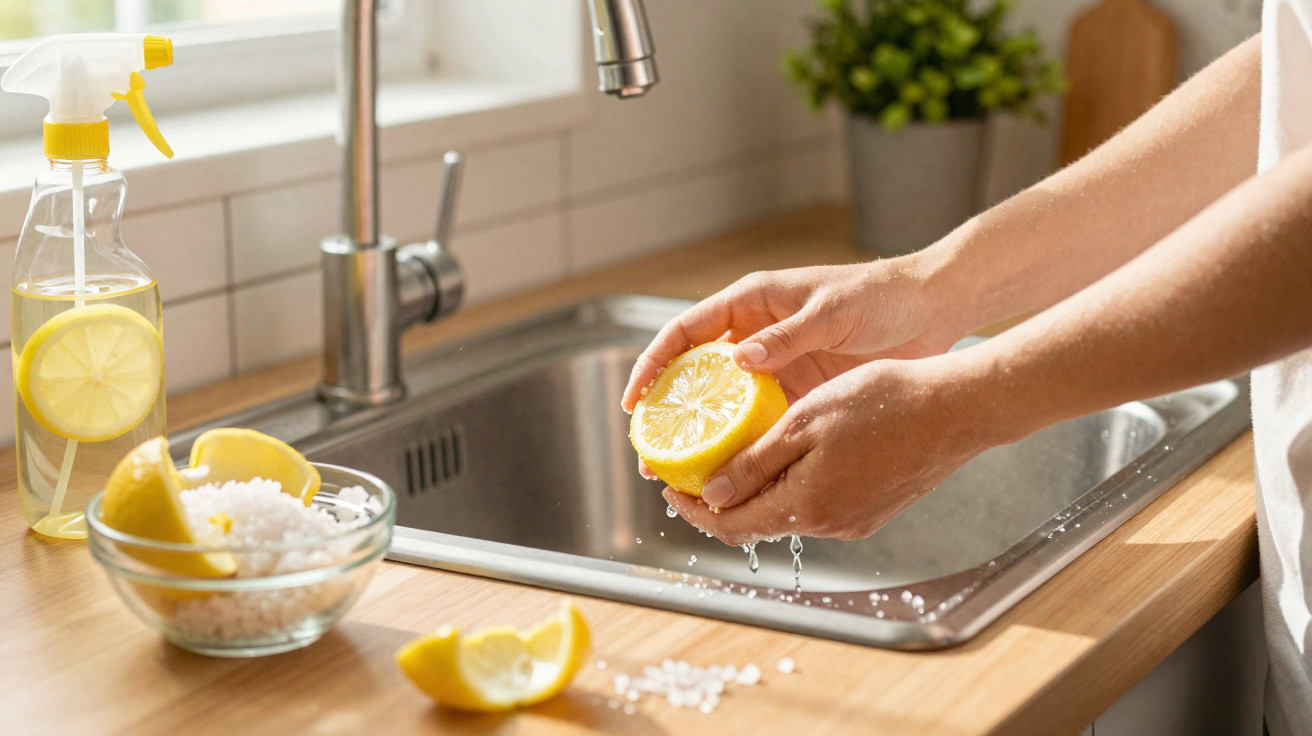
The combination of lemon peel and coarse salt has been appearing more and more in household cleaning routines as a straightforward, low-cost and surprisingly effective way to tackle grease and stubborn grime. It also makes better use of something that would usually be thrown away, while cutting back on ready-made chemical cleaners.
How do you prepare a lemon peel and coarse salt cleaning mixture?
For dependable results, people commonly use the peels from 2 to 3 medium lemons for every 120 ml of coarse salt. Wash the peels thoroughly first to remove any traces of pesticides and dirt. This ratio produces a firm “scrub” paste, and you can tweak it with a small splash of water or white vinegar-just enough to lightly dampen it.
There are two quick, practical ways to make it, mainly differing in resting time and how strong the fragrance becomes:
- Immediate mix: cut the peels into strips or small pieces, add them to a clean jar with the coarse salt, and stir until the salt begins to moisten from the peels’ natural oils.
- Quick maceration: gently crush the peels with a pestle or the back of a spoon to release more oil, then combine with the salt and leave it to sit for a few hours in a sealed jar.
Watch the video on the YouTube channel Marisa Romeiro | Healthy Weight Loss, which covers practical ways to use citrus peels for heavy-duty cleaning and degreasing around the home.
What is lemon peel with coarse salt used for in house cleaning?
This pairing works through both the physical abrasion of the salt and the lemon’s acidity, helping to lift stuck-on grease, dried-on food residue and lingering odours. In many homes it is used as an occasional booster, alongside mild washing-up liquid or vinegar, rather than as the only cleaning product.
Common uses include the hob, grills, pans, roasting tins, stainless-steel sinks and chopping boards-especially when there are baked-on crusts or strong smells from garlic, onions or fish. The citrus scent can also make the kitchen feel fresher straight away.
On which surfaces is lemon peel with coarse salt safest to use?
Even though it is “natural”, the mixture is both acidic and abrasive, so it can scratch or stain delicate surfaces if used carelessly. For that reason, it is best to test it first on a small, hidden area and scrub gently while checking how the material reacts.
It generally performs best on hard-wearing metals, stainless steel, ceramic, porcelain tiles and toughened glass hob tops-provided there is no fragile non-stick or delicate protective coating. On varnished wood, laminate flooring, certain types of marble and non-stick pans, use should be very limited or replaced with gentler options.
What are the benefits and limitations of using lemon peel with coarse salt?
One of the biggest advantages is using more of the food: the peel gets a second purpose before disposal, which can reduce waste and the packaging associated with industrial cleaning products. It is also flexible-you can keep it drier for stronger abrasion or dampen it slightly for medium-intensity cleaning.
On the other hand, it does not replace disinfectants when strict control of micro-organisms is needed, and it is not suitable for daily use on delicate finishes because it may cause wear and dull the surface. Anyone with sensitive skin should also wear gloves to avoid irritation from prolonged contact with lemon and salt during cleaning.





Comments
No comments yet. Be the first to comment!
Leave a Comment