
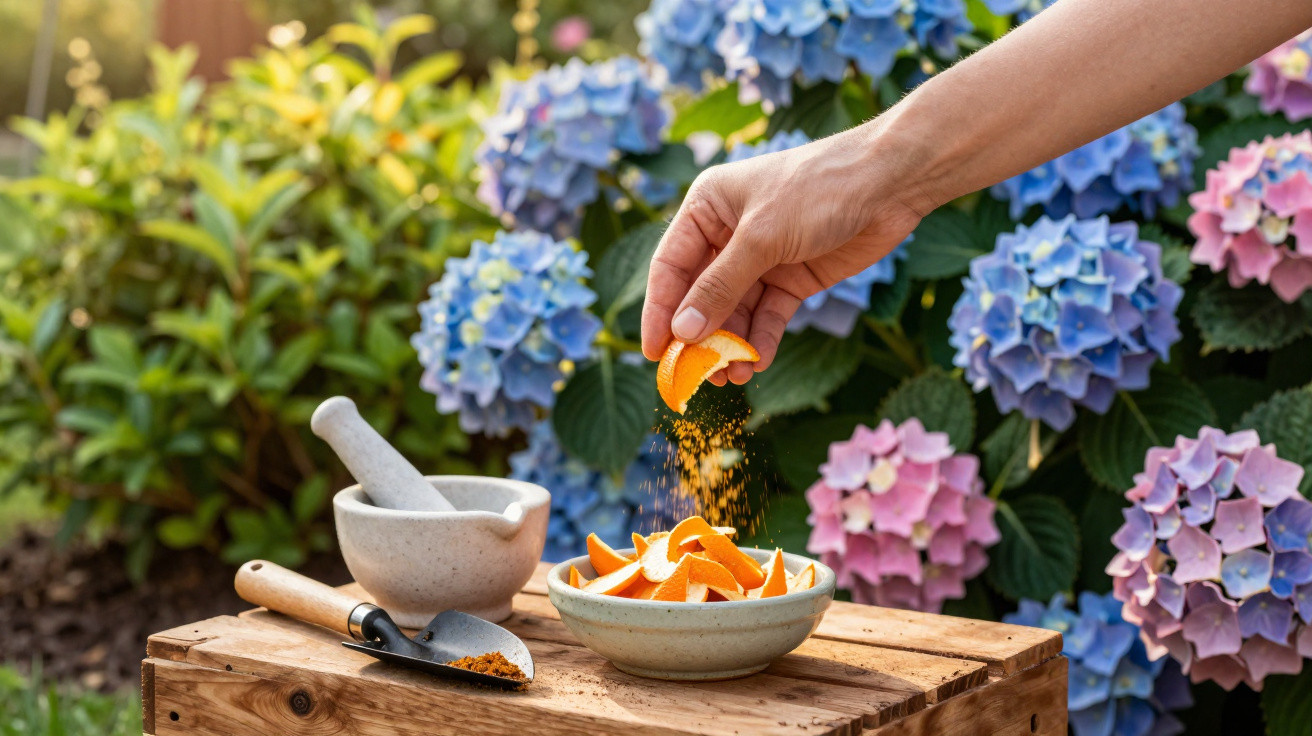
Many hydrangeas look limp, washed-out and weedy in summer – yet a kitchen leftover that often gets binned can turn things around.
More watering, pricey specialist feeds, buying new varieties – when hydrangeas fail to flower as hoped, gardeners often reach for time-consuming fixes. Yet the route to rich foliage and full, rounded flowerheads is frequently sitting in the food-waste caddy: dried orange peel. Used properly, it improves the soil, supports the plant and can even discourage a few pests.
Why hydrangeas often stay pale and lacking vigour
Hydrangeas are classic acid-loving plants. They prefer slightly acidic soil and are sensitive to too much lime. In many gardens, that is exactly the sticking point: the ground tends towards alkaline, and it can be pushed further by hard, lime-rich tap water.
The effects are easy to spot:
- Leaves turn yellowish while the veins remain green (chlorosis).
- Flowerheads stay smaller and look less dense.
- Colours lose their punch; pinks and blues fade.
- Shoots remain thin and the plant looks weakened overall.
This comes down to nutrient availability. In soil with too much lime, key trace elements – especially iron and potassium – are only partially accessible to the roots. Feeding alone won’t fix it if the pH is out of balance.
"If you really want to strengthen hydrangeas, you shouldn’t just feed them – you need to gently acidify the soil and supply a balanced range of minerals."
How orange peel strengthens hydrangeas
Dried orange peel is far more than kitchen waste. It contains several substances that suit hydrangeas well:
- Organic acids: help lower the pH slightly around the roots.
- Potassium: supports flower formation and strengthens cell structure.
- Nitrogen: encourages leafy growth and fresh shoots.
- Magnesium and calcium: important for healthy green leaves and sturdy tissue.
Because the soil becomes mildly more acidic, the roots can take up nutrients that were previously locked away. Often, within a few weeks you’ll see deeper-coloured foliage and stronger flower clusters.
The peel also contains essential oils. They’re not a harsh chemical punch, but they can create conditions in the root zone that some pests find less inviting.
How to prepare orange peel properly for hydrangeas
Simply dropping chunky fresh peel on the soil surface won’t do much – and, at worst, it can attract ants and other unwanted visitors. With a few quick steps, the scraps become a much more effective plant aid.
Step 1: Dry the peel thoroughly
Before the peel goes anywhere near your hydrangeas, it needs to be completely dry. This reduces the risk of mould and lowers the amount of sugar left on the surface.
Two straightforward methods work well:
- Air-drying: Slice the peel into strips, lay it on a tray or rack, and leave it somewhere warm with good airflow. Turn it occasionally.
- Oven: Dry at a low temperature (around 50–60 °C, fan-assisted) for a few hours, leaving the oven door slightly ajar.
It’s ready when the pieces are hard and brittle, snapping easily without much effort.
Step 2: Crush it for faster results
The finer the pieces, the quicker soil microbes can release the nutrients. Ideally, you want something close to a powder.
Useful options include:
- Coffee grinder or spice grinder
- Powerful blender
- Pestle and mortar (more effort, but quiet)
Store the resulting orange-peel powder in a screw-top jar somewhere dry – handy for quick top-ups when needed.
Correct use on hydrangeas in borders and in pots
To get the nutrients to where the plant can use them, all you need is a simple routine through the growing season.
Dosage and timing
For an established hydrangea in the ground, a handful of powder per month is usually enough during the growing period. For potted plants, use less, depending on the size of the container.
| Month | Recommended amount per plant |
|---|---|
| March | First application: 1 handful for large plants |
| April–June | 1 small handful each month |
| July–August | 1–2 further applications depending on the plant’s condition |
From September onwards, avoid any additional feeding so the shoots can mature properly before winter.
How to apply the powder
Application is straightforward:
- Sprinkle the powder in a ring around the hydrangea’s root area, not right up against the main stem.
- Work it lightly into the top 2–3 cm of soil.
- Water well so the compounds disperse through the soil.
In pots, it’s enough to loosen the surface with your fingers or a small tool and incorporate the powder. Important: never let the layer build up too thickly, otherwise the upper root zone may struggle to breathe.
Bonus effect: gentle deterrence for certain pests
Orange peel contains d-limonene, a compound with a strong citrus scent. That smell can unsettle ants and some types of aphid in the immediate root area. For hydrangeas, it means a small extra buffer right at the plant.
It’s not a miracle cure. If aphids or other pests are present in large numbers, you’ll still need targeted control. Even so, orange peel offers a welcome side benefit: soil care and mild deterrence in one go.
This approach isn’t limited to hydrangeas. Many other plants that prefer acidic conditions respond similarly well, such as:
- Rhododendrons
- Azaleas
- Camellias
- Potted blueberries
Common mistakes and what to watch out for
As useful as orange peel can be, a few points are worth keeping in mind.
- Don’t use fresh peel: it can attract fruit flies and, in the worst case, mice.
- Don’t overdo it: too much organic material in small pots can lead to rotting.
- A supplement, not a cure-all: badly depleted soil may also need compost or a dedicated hydrangea feed.
- Check your water: if your tap water is very hard, water with rainwater now and then.
If you want to be sure, you can test your garden soil with pH strips from a DIY shop or garden centre. A reading between 5 and 6 is considered ideal for most hydrangeas.
How to adjust care as the season goes on
Hydrangeas can respond surprisingly quickly once conditions improve. If, after a few weeks, you notice fresher leaves and stronger colour, you can simply keep the orange-peel routine and cover the remaining feeding needs in moderation.
If leaves stay yellowish, it pays to look more closely: are the plants baking in full midday sun? Has the pot become too small? Are you constantly watering with very hard tap water? Factors like these can reduce the benefits of orange peel.
One practical advantage is the cost: it’s almost free. If you regularly eat oranges or other citrus fruit, you can collect the “feed”, dry it and store it for later. Step by step, everyday kitchen waste becomes support for healthy, vigorous hydrangeas with strong blooms – without reaching for harsh chemicals.


Comments
No comments yet. Be the first to comment!
Leave a Comment