
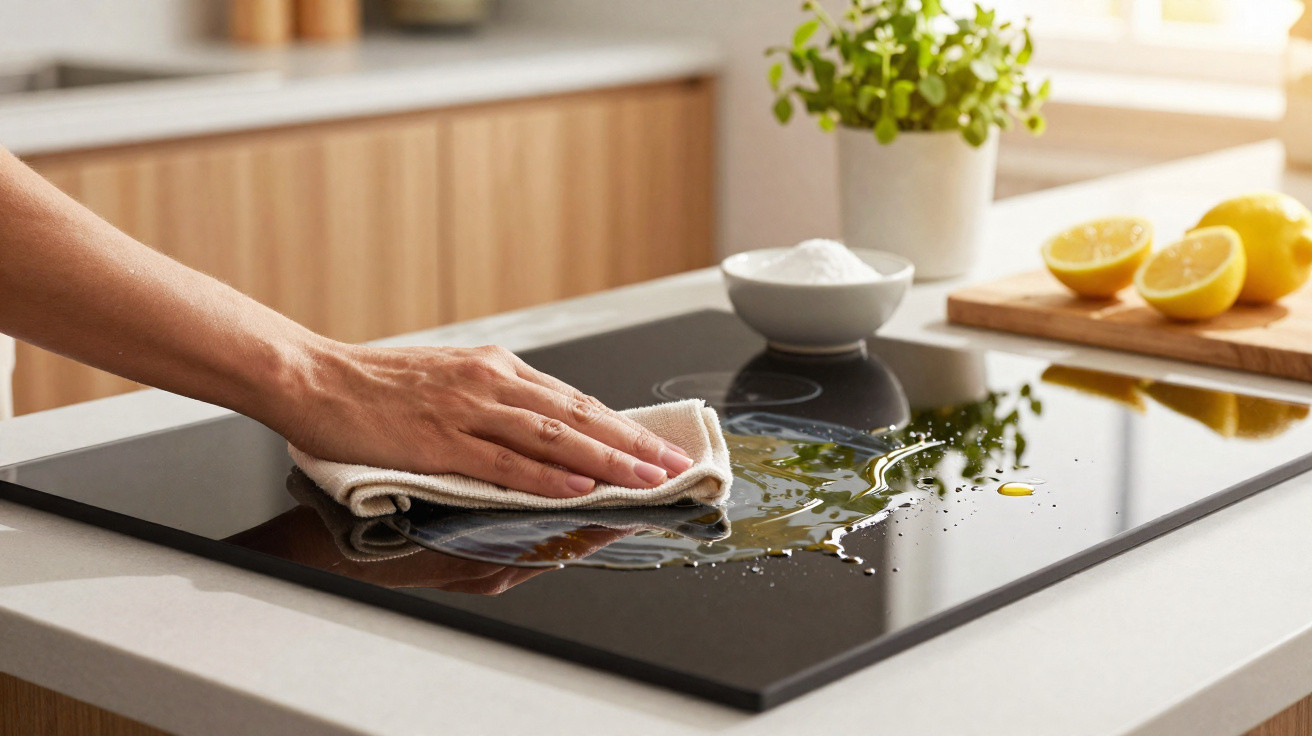
Many people reach for harsh sprays and pricey “power cleaners” the moment food has burned on. In reality, one everyday ingredient you probably already have in the fruit bowl is often enough to clean a ceramic hob (Ceran) or gas rings thoroughly. And no, it’s not some trendy foam from an advert - it’s much simpler.
Why your hob looks dirty so quickly
Cooking is messy by nature: fat spits, starchy liquids caramelise, and sauces boil over. If you don’t wipe it up straight away, residue dries on and the edges bake hard. Over time, a dull film builds up and the whole hob starts to look lacklustre. Using the wrong sponge or overly aggressive products can leave scratches or cloudy, matt patches.
On top of that, plenty of cleaners leave streaks or a greasy coating behind. It may look better for a moment, but after the next cooking session the surface is patchy again. This is where a natural helper stands out - one that cuts through grease, tackles limescale marks and even reduces light discolouration.
The overlooked hero: lemon to cut grease and bring back shine
Most of the time, a lemon ends up in tea or a salad dressing. But in the kitchen it can do much more. Lemons contain plenty of citric acid, which helps emulsify grease and break down mineral deposits. On smooth surfaces such as ceramic, induction and enamelled gas hobs, the effect is particularly noticeable.
"Lemon works like a gentle, natural cleaner: it dissolves grease, slightly brightens, and also leaves a fresh scent."
If you’d rather avoid chemicals - or you have sensitive skin - you get two benefits at once: you’re cleaning with a single food item that’s biodegradable and doesn’t produce irritating fumes.
Step by step: how to clean the hob using only lemon
Before you start, let the hob cool completely. Hot plates and acid are a poor combination - and there’s the risk of burns too.
Simple everyday clean with half a lemon
- Cut the lemon in half: Slice a fresh lemon across the middle. The cut side provides the acid, and the pulp gives a mild “scrubbing” effect.
- Quick pre-wipe: Remove crumbs and loose bits of food with a damp cloth so nothing gritty gets dragged across the surface.
- Rub with the lemon: Run the cut side directly over the hob. Use light pressure and small circular motions, lingering on greasy patches.
- Leave it to work: Let the juice sit on marks for two to five minutes so the acid can loosen grease and light burn-on.
- Wipe away with a damp cloth: Clean the surface with a soft, slightly damp sponge or microfibre cloth.
- Dry for a streak-free finish: Buff with a dry cloth until the hob shines again.
After this, many hobs already look noticeably cleaner and feel smoother. Lingering odours from the last frying session fade, leaving a fresh citrus note behind.
When the hob looks truly grim: lemon plus bicarbonate of soda
For baked-on edges or older layers of grease, lemon on its own isn’t always enough. In that situation, a simple cupboard staple from the baking aisle boosts the results: bicarbonate of soda (or baking powder based on bicarbonate of soda).
"The combination of acid and fine grit works in two ways: chemically loosening and gently abrading - without harsh scratches."
How the stronger mix works
- Get half a lemon ready: Take another lemon half, with the cut side facing up.
- Add bicarbonate of soda: Sprinkle a small amount directly onto the cut surface. It forms a light paste.
- Work it into the hob: Use the prepared lemon half to rub over heavily soiled areas. The mixture will start to fizz gently.
- Target stubborn spots: On very dark marks, rub a little more firmly - but don’t use rough scouring pads.
- Wait a few minutes: Let the reaction do its job, then lift everything off with a damp sponge.
- Rinse well and dry: Wipe several times with clean water until no bicarbonate of soda or lemon residue remains.
That lightly bubbling layer loosens dried sauce, cooking residue and greasy build-up far better than lemon juice alone. On smooth surfaces, bicarbonate of soda acts like an ultra-fine abrasive that won’t scratch under normal pressure.
Where this method is ideal - and where to be careful
Using lemon and bicarbonate of soda works particularly well for:
- Glass-ceramic hobs (Ceran or induction) without deep scratches
- Enamelled gas hobs and metal covers
- Oven fronts and lightly soiled metal trims
- Greasy stainless-steel areas around the hob
On very delicate materials such as natural-stone worktops, untreated wood or soft plastics, use acid sparingly and only on specific spots. It can etch surfaces or leave dull patches. When in doubt, test on an inconspicuous area first.
Advantages over typical kitchen cleaners
Many homes keep several sprays, gels and foam cleaners in the cupboard. There are, however, plenty of reasons to favour this straightforward citrus approach:
| Aspect | Lemon / bicarbonate of soda | Industrial cleaners |
|---|---|---|
| Cost | Inexpensive, often already at home | Much more expensive per use |
| Smell | Fresh, not harsh | Often heavily perfumed or chemical |
| Environment | Readily biodegradable | Some contain problematic ingredients |
| Handling | Mild; can be used without gloves | Warning labels often apply |
If you have children or pets, natural options usually feel more reassuring. Any residue on the surface can be removed completely with water, without leaving irritating substances behind.
How to keep the hob cleaner for longer
A simple routine keeps the surface looking better for longer and helps stop thick crusts forming in the first place.
- After cooking, quickly wipe over the surface while it’s still warm - but not hot.
- Mop up boiled-over liquids straight away before they dry.
- Once a week, do a brief “lemon treatment” instead of saving everything for occasional deep cleans.
- On ceramic hobs, stick to soft cloths and suitable scrapers.
These small habits save time day to day. Rather than scrubbing hard every few weeks, a few minutes of ongoing care is usually enough.
What makes it work
The lemon’s acid weakens the bond between grease and the surface, while bicarbonate of soda reacts with it to create a lightly foaming mixture. This helps break up grime layers without needing strong solvents. The fine particles in the bicarbonate of soda also act like micro-abrasives, lifting residue as you wipe.
It’s not completely effortless, of course. But if you tackle it smartly, you won’t need to scrape and scratch until your fingers ache. A few targeted passes with the right mix can make the hob look presentable again.
Other places to use it in the kitchen
The lemon and bicarbonate of soda combination isn’t just useful for the hob. Used in moderation, it can also help with:
- light staining in stainless-steel or ceramic sinks
- smells in the fridge (here, it’s better to use bicarbonate of soda on its own in a small bowl)
- greasy cooker-hood surfaces
- limescale marks on taps (use lemon on its own here and don’t leave it on for too long)
Keeping these simple household staples to hand can replace several specialist bottles. The kitchen feels less cluttered, the cleaning cupboard stays simpler - and the hob shines as if it’s been professionally cleaned.





Comments
No comments yet. Be the first to comment!
Leave a Comment